Bank of Canada Gov. Macklem Warns of Excess Imbalances Amid Shifting Financial System
Let me translate this for you: when the Governor of the Bank of Canada uses the word "sideswiped" to describe potential economic harm, you pay attention.
Julian Vance, Chief Business Columnist·updated June 23, 2026
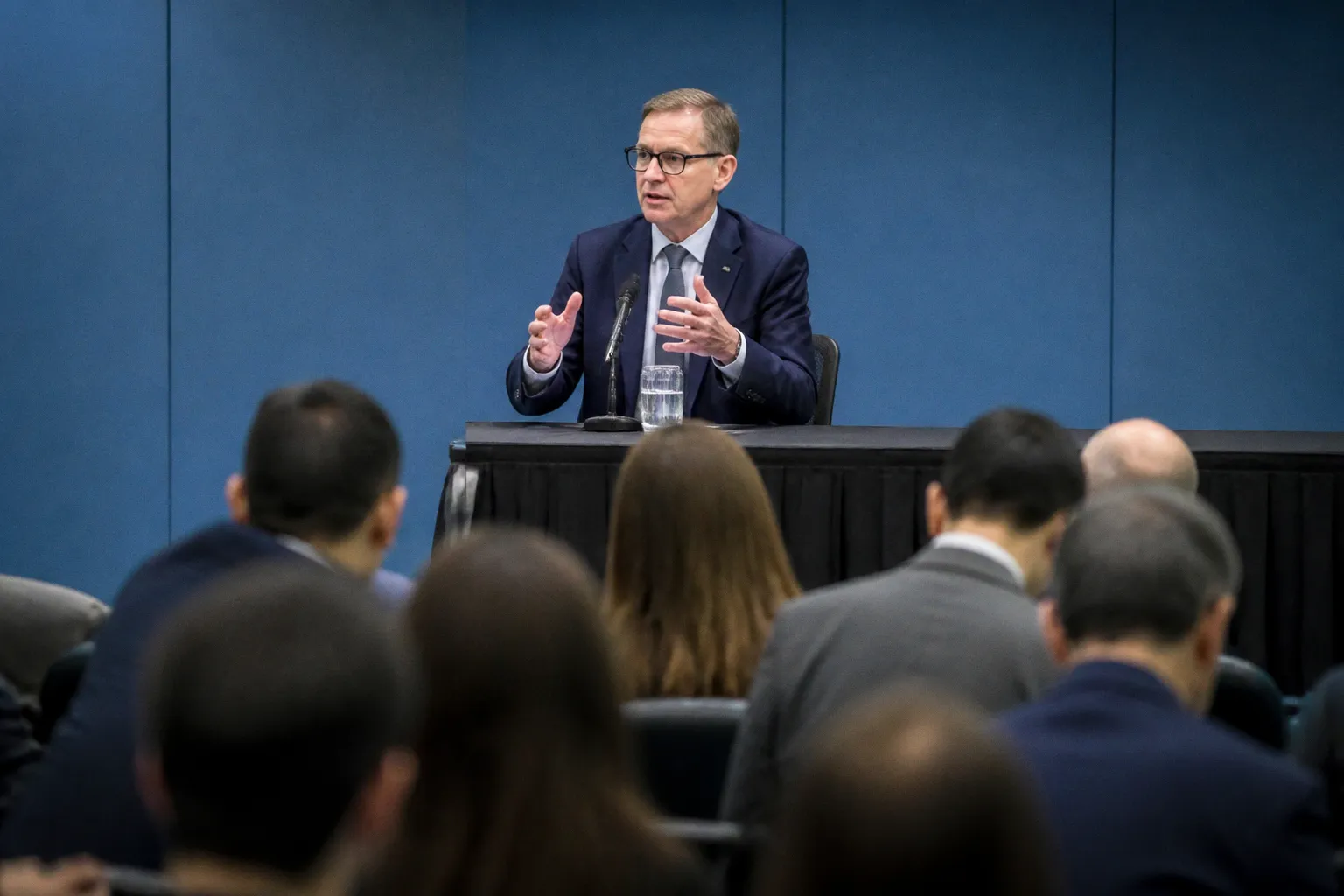
The Imbalance in Question
Macklem's core warning, as reported, centers on "excess imbalances" and "over-investment in the U.S." posing global financial risks. Let's unpack the leverage here. This isn't about a single stock or sector being overvalued. It's about a systemic tilt—a massive, sustained flow of capital into the world's largest economy, potentially creating asset bubbles and disconnecting prices from underlying fundamentals elsewhere. It's the kind of imbalance that doesn't correct gently. It snaps.
For the financial system, this concentration is a mirage of safety. The U.S. market's depth and liquidity are attractive, but crowding into it amplifies the eventual correction. Macklem, from his perch in Ottawa, is observing this not as a distant phenomenon, but as a structural shift with direct consequences for Canadian financial stability. He’s sounding the alarm that the very system is shifting under our feet, and not necessarily toward safer ground.
Canada’s Precarious Perch
The Financial Post captured the blunt risk: Canada could be "sideswiped." This isn't a direct hit from a Canadian policy error. It's collateral damage from a global portfolio reallocation. If the tide of capital flooding into the U.S. suddenly retreats or reverses violently, the shockwaves will hit neighboring economies and currencies first.
For Canadian businesses and investors, the practical friction is in capital costs and currency volatility. A sudden repricing of U.S. assets could strengthen the U.S. dollar sharply, creating havoc for Canadian exporters and importers alike. It could tighten financial conditions globally, even if the Bank of Canada's own policy is on a different path. Macklem is essentially telling markets that Canadian monetary policy doesn't operate in a vacuum; it's hostage to these larger, potentially destabilizing, global flows.
What to Watch and Why It Matters
So, what does the seasoned insider do? First, ignore the generic "risk-on/risk-off" chatter. The specific risk here is geographic concentration and its unwinding. Second, watch the U.S. dollar index and Canadian credit spreads not just for daily moves, but for sustained trends that signal the imbalance is correcting. A slow, orderly adjustment is the benign scenario; a rapid, disorderly one is the "sideswipe."
Macklem’s commentary is a classic case of a central banker using his platform to manage expectations and jolt complacent investors. He's leveraging his authority to highlight a structural fault line before it cracks. For the audience here, the takeaway isn't to panic about Canada, but to audit your own exposure to this single, massive bet on U.S. exceptionalism. In finance, the greatest risks are often the ones everyone assumes are guaranteed. Hubris is believing the imbalance will correct on your schedule.