German Chancellor Merz Unveils Sweeping Economic Reform Package
Germany’s new economic reform package has landed with the usual choreography: Chancellor Friedrich Merz, coalition partners at his side, promising to jolt a sluggish economy with tax cuts and pension overhauls.
Sylvia Parrish, Chief Business Columnist·updated July 03, 2026
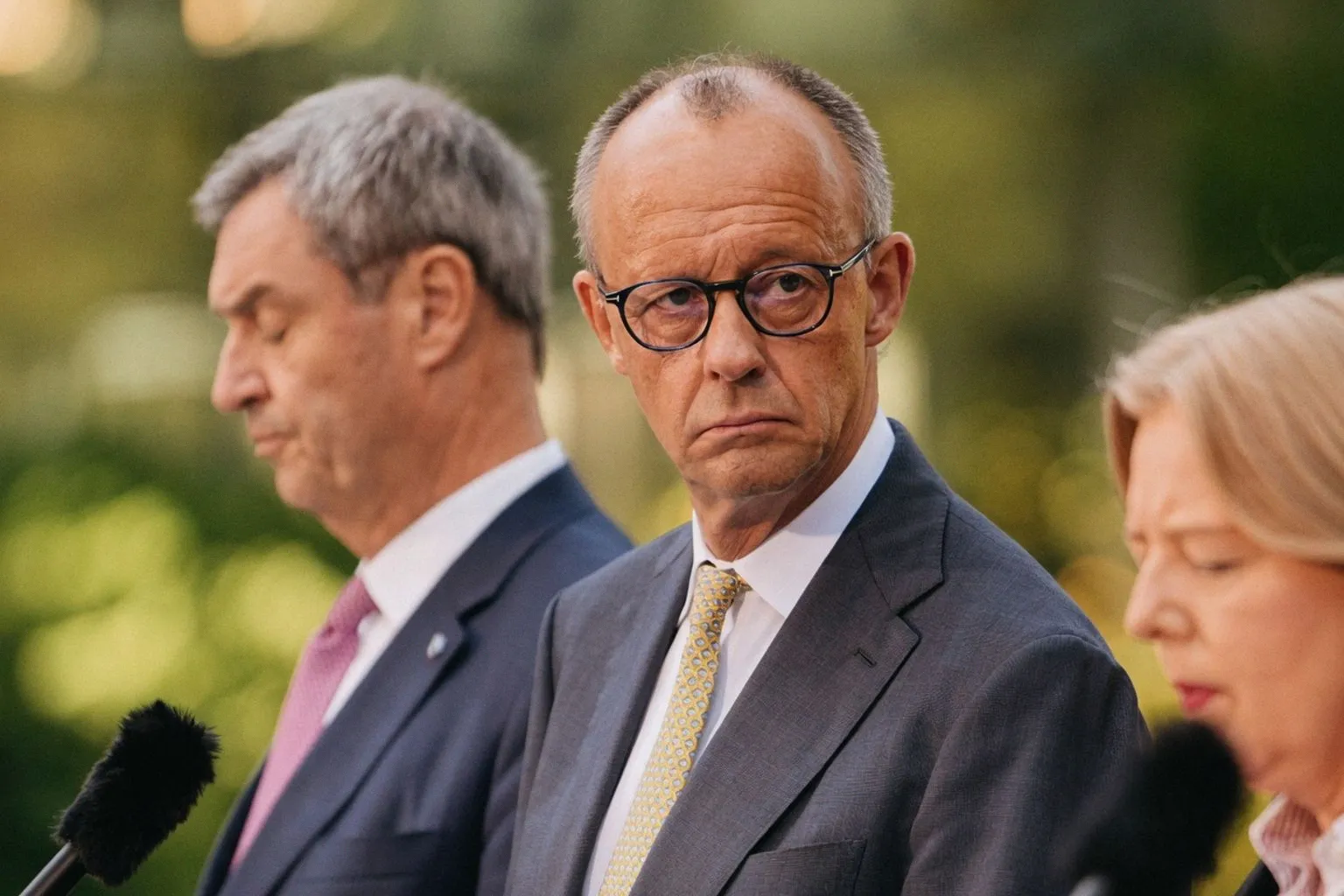
For markets, the point is not the garden press conference. It is whether Berlin is finally willing to trade political comfort for economic friction — and whether investors should treat this as reform, theatre, or the familiar German art of announcing a difficult conversation before diluting it into soup.
The market signal is tax relief plus pension surgery
Let me translate this for you: tax cuts are the easy part to sell, pension overhauls are where governments discover gravity.
According to AP, Merz and his coalition partners introduced the package with the stated aim of reviving Germany’s sluggish economy. The two named levers are tax cuts and pension changes. That pairing matters because it tries to speak to both sides of the balance sheet: give businesses and households more room through taxes, while addressing long-term pressure in the retirement system.
That is the clean version. The harder version is this: Germany is not short of committees, communiqués or solemn faces at podiums. It is short of momentum. Any reform package worth watching must reduce friction for capital formation, hiring and investment without creating a fiscal mirage somewhere else.
Investors should therefore resist the first headline reaction. “Tax cuts” is not a strategy by itself. It is a line item. “Pension overhaul” is not reform until the pain is allocated and the timetable is visible. Who pays? Who waits? Who gets protected? That is where the leverage sits.
The coalition optics matter because execution will be the trade
The presence of Merz with key coalition figures is not decorative. It tells markets this is being presented as a government-level package, not a solo flight by the chancellor. Söder, Bas and Klingbeil appearing in the same frame gives the announcement political weight — and also reminds us how many hands can later soften the blade.
That is not cynicism for sport. It is the operating manual of coalition economics. Big reform packages tend to leave the podium looking muscular and enter the legislative process wearing slippers.
For business readers, the practical question is not whether the words “revive the economy” sound pleasant. They do. They always do. The question is whether tax changes, once specified, improve after-tax returns enough to shift investment decisions. The second question is whether pension changes reduce long-term fiscal pressure or merely rearrange the furniture.
Until those details are clear, companies with German exposure should treat this as a policy signal rather than a completed regime change. Watch for draft legislation, implementation dates, eligibility rules and any carve-outs. The devil, as ever, will not be in the press photo. It will be in the footnotes.
What to check before moving money
If you run capital, sell into Germany, employ people there, or hold European cyclicals with meaningful German sensitivity, do not trade the slogan. Track the mechanism.
First, identify which taxes are actually being cut and for whom. A broad cut can change consumption and investment assumptions; a narrow one may only flatter a few models and produce a nice talking point. Second, watch the pension side for concrete obligations. “Overhaul” can mean structural repair, incremental adjustment, or political smoke in a tailored suit.
Third, monitor coalition discipline. A reform package introduced by coalition partners can signal alignment. It can also signal the start of negotiation by press conference. Markets prefer the former and have seen plenty of the latter.
There is a real issue beneath the politics: Germany’s economy is described by AP as sluggish, and Berlin is now publicly aiming policy at revival. That alone makes this worth watching for investors, exporters and anyone exposed to European industrial demand. But I would not confuse an announcement with a turn in the cycle.
Reform is not what a government says in the garden. Reform is what survives the room after everyone stops smiling.