China drops to 5th place in global financial competitiveness ranking
Here's a number Beijing won't love seeing in print: China just slipped one notch to fifth place in the global financial competitiveness rankings, according to a fresh report from the Chinese Academy of Social Sciences.
Sylvia Parrish, Chief Business Columnist·updated July 06, 2026
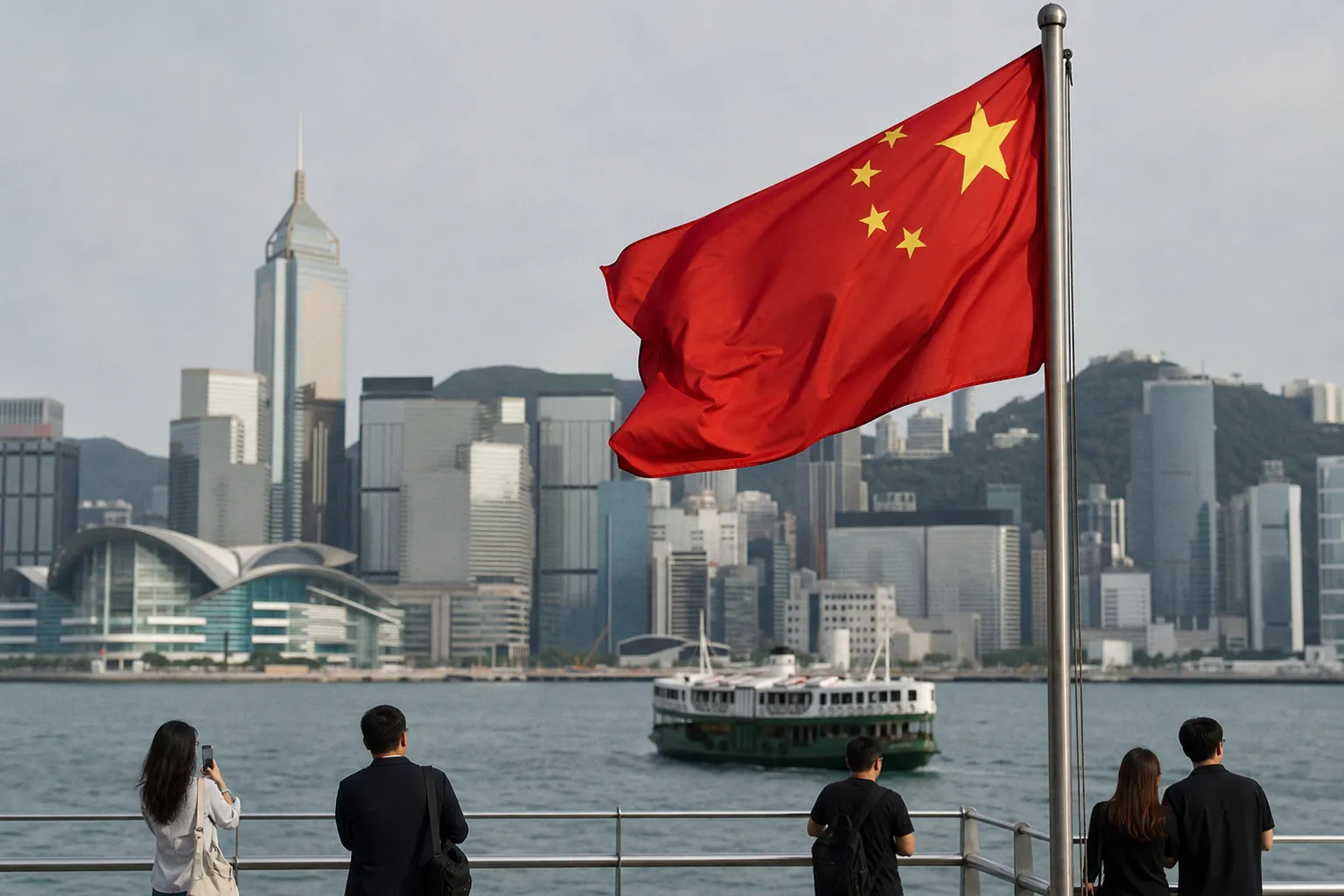
The Official Diagnosis: Volatility as Kryptonite
Liu Dongmin, from CASS's Institute of World Economics and Politics, pinned the slide squarely on stock market turbulence through 2024 and 2025. That's a polite way of describing what anyone watching Chinese equities already knows — the persistent, grinding instability that spooked both domestic retail investors and the foreign institutional money Beijing has spent years trying to court. The ranking evaluates five pillars: financial industry competitiveness, currency strength, financial infrastructure, fintech, and international financial governance. Whatever gains China posted in fintech or infrastructure — and there were gains — couldn't offset the drag from markets that treated capital like a hot potato.
A Self-Assessment With Teeth
The report dropped at the Global Digital Economy Conference 2026 in Beijing, which tells you something about the political choreography here. CASS isn't some rogue academic outfit; this is a government-backed academy releasing findings in a government-backed venue. The framing — "we're committed to becoming a global financial superpower despite the setback" — reads less like a concession and more like a recommitment. The ranking system itself, launched in 2021 across 31 economies, was arguably designed so Beijing could benchmark its own progress in dollar terms. Now that benchmark is flashing amber.
What This Actually Means for Capital Allocators
Let me translate: if you're running money with China exposure, the institutional narrative just got more complicated. The ranking doesn't move markets on its own, but it feeds a compounding perception problem. Beijing wants the world to treat the renminbi as a reserve-grade currency and Shanghai as a credible alternative to London or New York. Each slip — especially one acknowledged domestically — erodes that pitch. Meanwhile, the US holds the top slot despite its own fiscal circus, which tells you how much structural incumbency still matters.
For investors, the practical friction is real. Market volatility isn't an abstract statistic; it's the reason foreign fund managers keep China allocations smaller than the country's GDP would otherwise justify. One ranking drop won't reshape theses overnight, but it adds to the pile of caution flags that keep global capital hedged — often literally — against full commitment to Chinese financial markets.
The Fintech Contradiction
Here's the irony: China remains a fintech powerhouse by most objective measures — Alipay, WeChat Pay, digital yuan pilots, aggressive AI deployment in lending. Yet the CASS framework treats fintech as just one of five inputs, and the weighting clearly didn't rescue the overall score. That matters because Beijing has leaned hard on fintech credentials as proof that its financial system is modernising. Being told you're fifth when you've been pitching yourself as a future number one is, to borrow a word, hubris meeting arithmetic.
The question now is whether the next round of reforms — market stabilisation, further opening of capital accounts, genuine regulatory transparency — can reverse the slide. Or whether fifth place becomes the new baseline.
History suggests that when China's own institutions publish uncomfortable rankings, the policy response tends to be swift and muscular. Watch for it.