EBRD Targets Nigerian Banking Sector and Priority Industries to Boost Investment
A development-bank headline is doing the rounds: the EBRD is said to be targeting Nigeria’s banking sector and “priority industries” to boost investment.
Sylvia Parrish, Chief Business Columnist·updated July 04, 2026
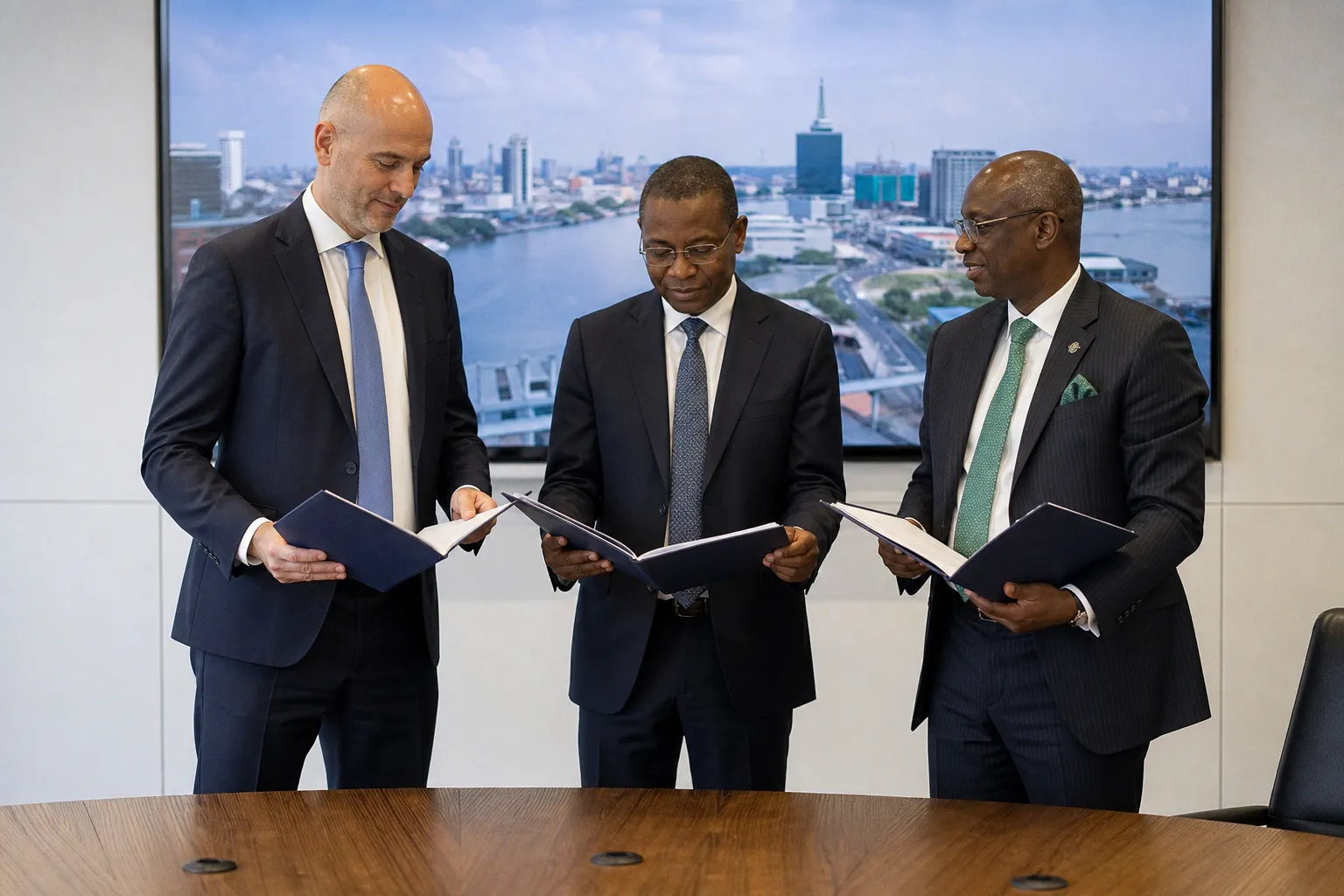
The banking channel is the point, not the decoration
Let me translate this for anyone tempted to file the item under “nice emerging-market mood music.” If the EBRD is focusing on Nigerian banks, the real question is not whether another institution has discovered Africa’s largest business story. The question is whether capital can move through the banking system into sectors that actually compound.
The available report says the EBRD is targeting Nigeria’s banking sector and priority industries to boost investment. It does not give deal sizes, named banks, instruments, eligibility rules, or a timetable. So we should not pretend to know whether this means credit lines, guarantees, equity-style exposure, technical assistance, or some blend of the usual development-finance toolbox.
But the architecture is familiar. Development lenders rarely want to underwrite every factory, exporter, logistics operator or clean-energy project one by one. Too slow. Too much friction. Banks offer reach, risk filters and local knowledge — when they are healthy enough to use them properly. When they are not, they become expensive plumbing with marble lobbies.
That is what investors should watch: not the announcement, but the transmission.
Nigeria is not short of ambition; it is short of cheap friction
Nigeria’s investment case has never lacked adjectives. “Priority industries” is another broad phrase that can mean everything and nothing until someone attaches credit criteria to it. I have watched enough frontier-market financing cycles to know the script: first comes the institutional optimism, then the glossy panels, then everyone discovers that collateral, currency risk and bank capital are not minor footnotes. They are the plot.
For businesses and investors, the practical checklist is simple. If Nigerian banks become the route for EBRD-linked investment, the value will show up in actual lending behaviour: longer tenors, better pricing, more appetite for productive sectors, and less theatrical caution around projects that need patient capital. If nothing changes at borrower level, the headline was merely a mirage wearing a multilateral badge.
There is also a wider pattern worth noting. Separate reports this week point to financial-centre cooperation elsewhere: GIFT City has entered a partnership with the Vietnam International Financial Center–Da Nang to deepen cooperation in financial services, fintech, innovation and cross-border investment. The agreement covers financial-sector development, digital innovation, joint research, institutional engagement, knowledge sharing and capacity building. Another report says the Hong Kong Monetary Authority and the Central Bank of Türkiye have signed a strategic fintech innovation partnership.
That does not prove anything about Nigeria. It does show the mood: capital hubs and official institutions are trying to build corridors, not just stage conferences. The cynic in me has seen corridors become cul-de-sacs. The financier in me knows some of them become toll roads.
What to watch before calling it a breakthrough
The next useful facts would be painfully specific: which Nigerian banks, which sectors, what instruments, what conditions, and who bears the risk when a project goes sideways. Without that, “boost investment” is a slogan with good tailoring.
For bank shareholders, the key issue is whether any EBRD involvement improves funding access or simply adds compliance-heavy obligations. For corporate borrowers, the question is whether credit becomes more available in the industries being prioritised. For foreign investors, the signal is whether official capital is willing to absorb some of the market’s harder edges — or merely endorse Nigeria from a safe distance.
I would also watch whether the initiative connects to cross-border finance rather than just domestic lending. The GIFT City–Vietnam agreement, for example, explicitly points to business linkages and fresh investment opportunities between two financial centres, while GIFT City’s broader ecosystem now includes more than 1,500 entities, banking assets of USD 111 billion at its international financial services centre as of March 2026, and 217 fund management entities overseeing 360 schemes with more than USD 39 billion in cumulative commitments. That is what scale looks like when institutions publish the receipts.
Nigeria does not need another ceremonial ribbon. It needs capital that survives contact with reality. Until the EBRD headline turns into names, terms and disbursements, keep the champagne corked and the spreadsheet open.