Strait of Hormuz Crisis: How Oil Prices, Inflation & Global Monetary Policy Could Impact the World Economy
India's central bank just told you exactly how scared it is — without saying it out loud.
Julian Vance, Chief Business Columnist·updated June 21, 2026
The Crude Nobody Wants to Price
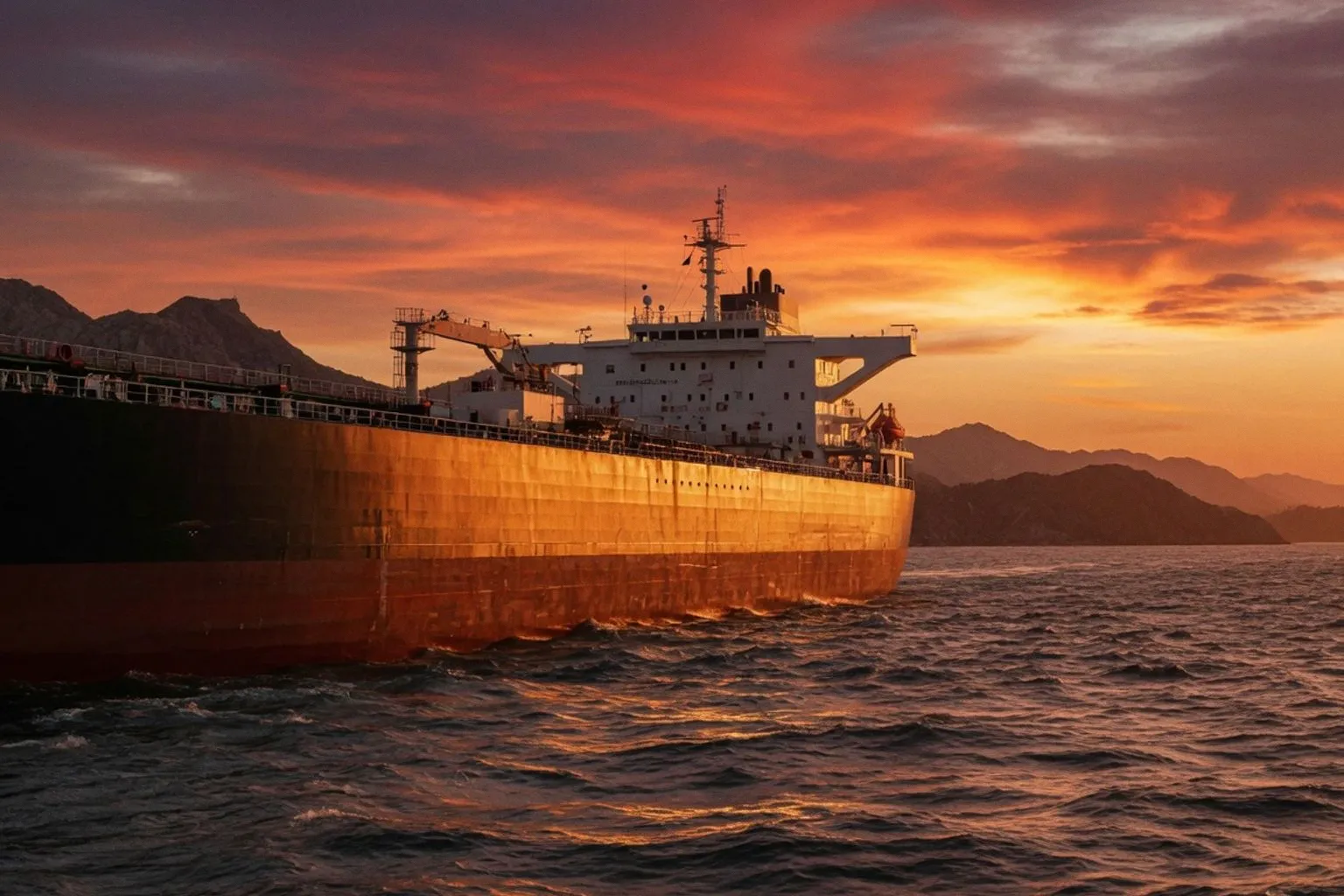
Crude is the ghost in this room. MPC members explicitly noted that commodity prices, especially crude, are not expected to fall back to pre-war levels anytime soon — even though the West Asia conflict that rattled the Strait of Hormuz officially ended on Friday. Deputy Governor Poonam Gupta was blunt enough for a regulator: supplies have been secured from diverse sources, yes, but at higher prices, compounded by higher shipping and insurance costs, and exchange rate depreciation. Translation for the rest of us — the bill is being passed through, partially, and the rest is queued up for the next quarter.
The committee revised FY27 inflation upward to 5.1% — a full 300 basis points above FY26's 2.1%. Growth was scaled down to 6.6%, exactly 100 bps below last year's 7.6%. That's not a soft-landing trajectory. That's a regime where the central bank is choosing to absorb the inflation hit rather than choke off what growth remains. The friction is structural: tighten now and you break the expansion; hold and you let expectations drift toward that 6% ceiling.
What the Committee Won't Say Plain
Let me translate the careful minutes-speak. External member Nagesh Kumar essentially laid out the unpalatable trade: growth down 100 bps, inflation up 300 bps, and the answer is nothing. External member Saugata Bhattacharya flagged the Met department's deficient monsoon forecast, warning that agricultural output and prices demand heightened awareness. When central bankers start invoking weather patterns as a macro risk in the same breath as oil supply shocks, you know they've exhausted their conventional levers.
Governor Malhotra's framing was almost too elegant: "Our economic situation is quite strong and healthy vis-à-vis many of our peers." Comparative resilience — while projecting Q3 inflation at 5.9% and watching the rupee absorb every barrel of imported crude at elevated shipping and insurance spreads. The hubris of peer-comparative comfort is a luxury good, and it depreciates with every basis point of pass-through.
What to Watch
Fuel is the next shoe. Malhotra himself warned that revisions in retail petrol and diesel prices will push fuel inflation higher in coming months. Food has a tailwind from a good rabi crop and adequate stocks, but a below-normal monsoon and likely El Niño conditions could erase that buffer fast. If Q3 prints anywhere near the projected 5.9% — or worse, above it — the "wait and watch" chorus will get shorter, louder, and considerably less unanimous.
You don't need to be a rate-path oracle to read these minutes. The RBI is buying time with policy stability while hoping the crude complex and the monsoon cooperate. One of those bets has historical odds; the other is a coin flip dressed up as a forecast.