Japan raises interest rate to highest for 31 years
One percent. That's the number. After three decades of zombified monetary policy, the Bank of Japan dragged its policy rate from 0.75% to 1% on Tuesday — a level this country hasn't seen since 1995.
Julian Vance, Chief Business Columnist·updated June 22, 2026
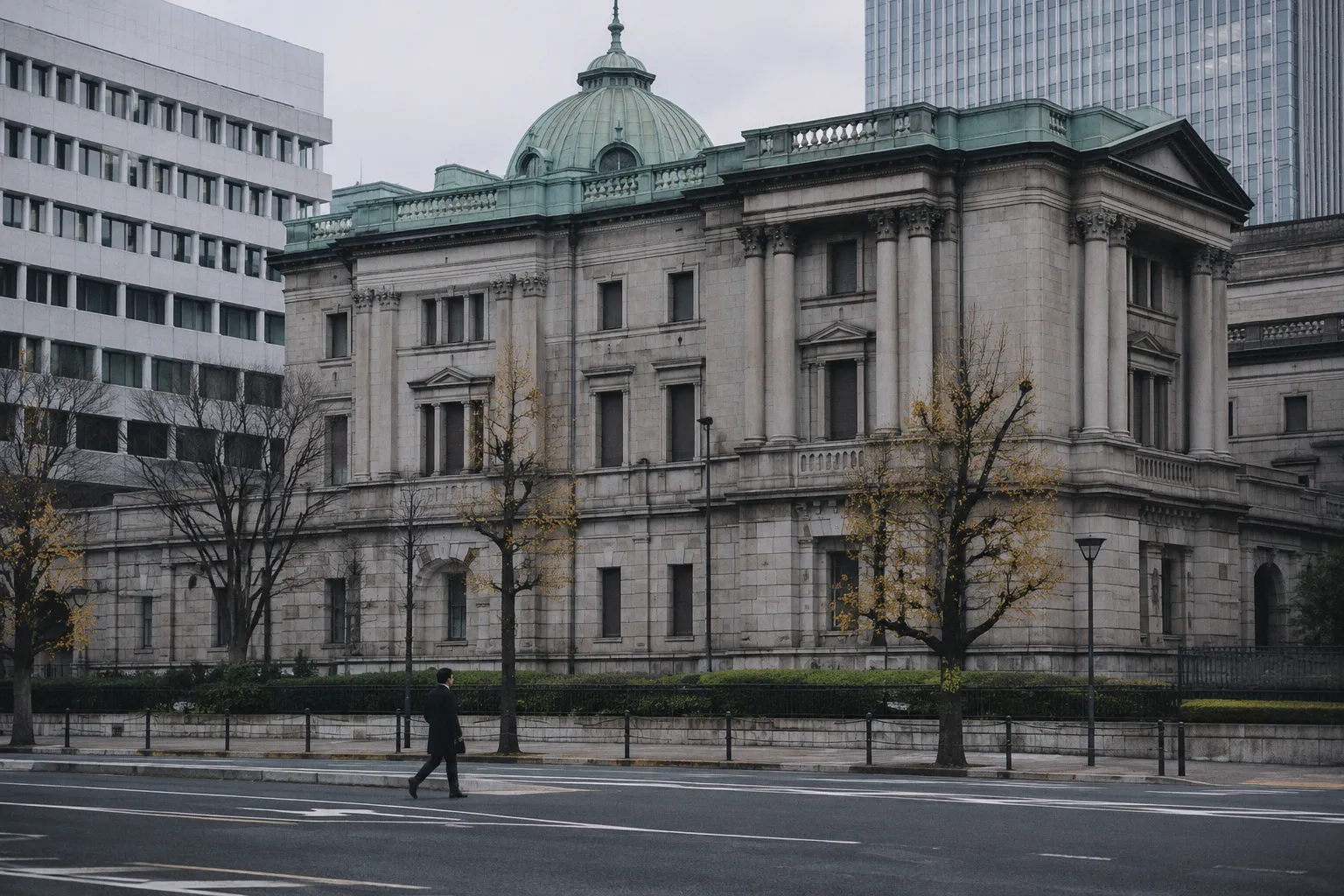
The mechanics of the move
The BOJ raised its main policy rate by 25 basis points, the second hike since Prime Minister Sanae Takaichi took office. Governor Kazuo Ueda wasn't even in the room — he's hospitalized with an infected liver cyst — but his fingerprints are all over the decision. Deputy governors carried the vote, and frankly, the policy direction was telegraphed the moment BOJ lifted rates to "around 0.75%" back in December. The yen needed defending. The math demanded it.
Wholesale prices in Japan climbed more than 6% year-on-year in May — the fastest pace in three years. Headline CPI sits at 1.4%, still below the BOJ's 2% target, but the wholesale figure tells you where consumer prices are headed. Anyone pricing imported goods right now can do the arithmetic.
Why now — and why it matters beyond Tokyo
Two words: Iran war. The US-Israel conflict with Tehran pushed energy costs higher, and Japan — a country that imports the vast majority of its oil and gas — caught the bill directly. Higher fuel costs, combined with a yen that traders had pummeled against the dollar and euro, created the kind of imported inflation that central banks can't ignore even when domestic demand is soft.
Jesper Koll, the Japan economist, nailed the framing for the BBC: "After twenty years of deflation, Japan is now in an inflationary upcycle. Emergency/crisis management monetary policy is no longer needed and the BOJ wants to get back to a normal monetary policy." Translation: the deflationary ghost that haunted Tokyo since the asset bubble burst is finally exorcised, and pretending otherwise would be malpractice.
But here's the friction nobody wants to discuss out loud. Takaichi is a fiscal dove — she wants spending, stimulus, and a weak yen that flatters Japanese exporters. She dismissed rate hikes before taking office. The fact that she hasn't publicly clashed with BOJ since winning the premiership tells you either remarkable institutional deference or a quiet understanding that without higher rates, the yen becomes a punchline. Ulrike Schaede at UC San Diego put it cleanly: "There has been a sense that the yen is too cheap and that raising its currency will not hurt."
The trade-off BOJ won't escape
Higher rates cool inflation. Higher rates also make Japan's debt service — already the stuff of fiscal nightmares — more expensive. The government carries the heaviest debt-to-GDP ratio in the developed world. Every basis point the BOJ adds is a basis point the Ministry of Finance has to roll into refinancing costs.
The BOJ acknowledged the risk in its statement: "Taking into account that medium- and long-term inflation expectations have also continued to increase, there is a risk of underlying inflation deviating above our price target." That's central-bank speak for "we know we're late, and the window is closing."
What I'm watching
Three things, in order of importance. First, the yen. If USD/JPY doesn't respect this move and pushes higher, the BOJ will have to choose between more aggressive hikes or credibility damage. Second, Ueda's recovery. His absence is a procedural footnote now, but a prolonged vacancy at the top during a normalization cycle invites exactly the kind of market volatility that policymakers hate. Third, Asian spillover. As The Star reported, Japan's rate normalization will ripple through Asian financial centers more than European ones — carry trades funded in yen unwind, regional currencies reprice, and borrowers across Southeast Asia suddenly remember what interest expense feels like.
Twenty years of zero was always a mirage dressed up as prudence. The BOJ just told you the costume came off.