Why AI Hype Often Fails to Solve the Challenges of Cyclical Industries
According to the Financial Times, the AI revolution is now taking on “the world’s most cyclical industry.” That is the entire confirmed substance available in the source material — no sector, company, contract value or deployment timetable.
Sylvia Parrish, Chief Business Columnist·updated July 22, 2026
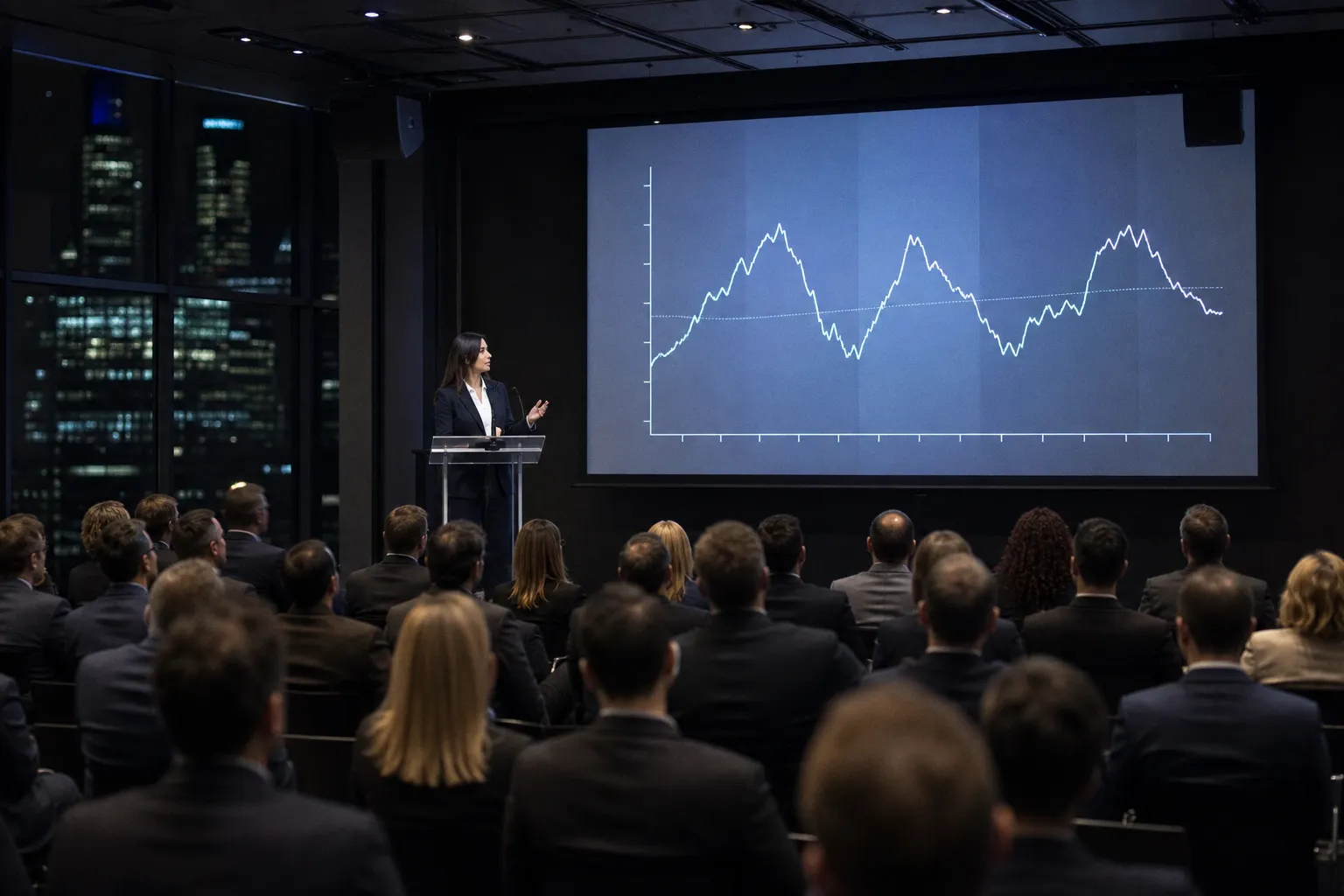
Which is not a nuisance. It is the point at which an investor should stop admiring the headline and start pricing the friction.
AI is being sold as an antidote to volatility almost everywhere. Cyclical industries, however, have a nasty habit of reminding executives that software cannot repeal supply, demand or capital discipline. I watched similar confidence collide with reality in 2008. The branding was different; the hubris was not.
The claim is bigger than the evidence — for now
The FT headline signals a serious market question: whether AI can materially change an industry whose fortunes rise and fall with the cycle. But the available evidence does not identify the industry, explain the mechanism, or show who bears the cost of adoption.
That distinction matters. “AI is coming” is not an investment thesis. It is a press-release-sized observation. The useful questions are less glamorous: does the technology reduce a recurring operating cost, improve pricing decisions, tighten inventory control, or merely add another line item to the technology budget?
In a cyclical business, leverage cuts both ways. A tool that improves execution during a downturn can matter enormously. A tool bought at the top of the cycle, with assumptions baked in from sunnier days, can become an expensive mirage with a dashboard attached.
Don’t mistake automation claims for market proof
Elsewhere in the news flow, The Manila Times reports that XRP Power has launched an AI-driven digital-asset platform, describing automated portfolio-allocation strategies, multi-currency yield contracts and real-time market tracking. The company says the platform operates across 189 countries and uses measures including multi-signature authorization, two-factor verification and cold/hot wallet isolation.
Those are company claims reported in the source material, not proof that AI has solved the old problem of allocating capital through volatile markets. “Automatic” does not mean prudent; it means the decision process has moved somewhere less visible. Often into a model, a ruleset or an execution layer that users will only interrogate after it disappoints them. A timeless tradition in finance.
For readers, the practical distinction is simple. Separate the technology’s advertised capability from independently demonstrated outcomes. Ask what the system actually decides, who sets its constraints, how execution is recorded, and what happens when market conditions stop resembling the data that trained the model.
What to watch before assigning a premium
The next meaningful disclosure on the FT theme should answer three basic questions: which cyclical industry is involved, what AI is changing in the operating model, and whether the benefit survives a downturn rather than a conference-stage demonstration.
Until then, treat broad AI language as an opening bid, not settled value. In markets, the hard part was never finding a machine that can make decisions. It was finding one that can make fewer bad decisions when the cycle turns.